Six Whole Spices, One Index Card: The Starter Spice Shelf That Teaches You to Cook
Most of us start cooking Indian food with a recipe open on the counter and a jar of something ready-made in the fridge. Nothing wrong with that. But there’s a point where the recipe card starts to feel like a crutch, and the jarred sauce tastes the same every time. A small, well-chosen spice hamper can move you past that point faster than a shelf full of blends.
The trick is to resist the urge to buy everything at once. Six whole spices, one index card, and three dinners you can cook on a Tuesday will teach you more than a 12-jar rack ever will.
Why whole spices are kinder to beginners
Whole spices are forgiving in a way ground powders aren’t. They sit in hot oil and tell you when they’re ready — a mustard seed pops, cumin darkens, coriander smells citrusy and warm. You can fish out a cinnamon stick if you’ve overdone it. You can’t un-ground a powder.
They also last longer. A jar of ground cumin can go flat in six months; whole seeds keep their punch for a year or more in a cool cupboard. For a UK kitchen where shelf space is tight and the hob is often the warmest spot in the room, that matters.
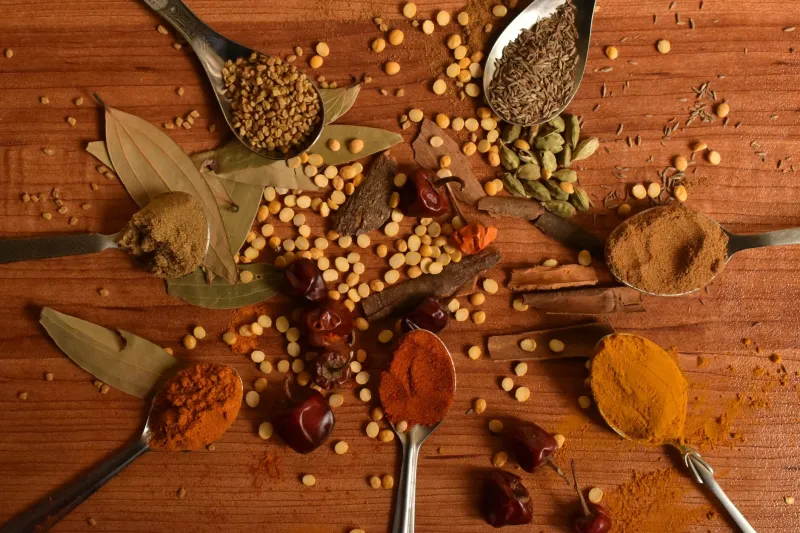
The six that earn their place
- Cumin seeds (jeera). The workhorse. Toast a teaspoon in oil before rice, potatoes, or lentils. Earthy, warm, hard to ruin.
- Coriander seeds. Citrus and gentle. Crush a tablespoon in a pestle and mortar for a quick curry base, or toast them whole with cumin.
- Black mustard seeds. Smaller than you expect, and they pop loudly in hot oil. A South Indian habit that makes dal and roasted vegetables taste finished.
- Green cardamom pods. Crush the pods lightly. One or two in rice, a few in chai, a couple in a milk pudding. Floral without being perfumed.
- Cinnamon bark (cassia). Buy sticks, not powder. One stick in a curry or a pan of rice adds sweetness and depth. Snap it if it’s long.
- Dried red chillies. Whole, not flakes. Break one or two into a dish and taste before adding more. You control the heat, not the jar.
That’s it. Six. If you want a seventh, buy a small bag of ground turmeric — it’s the one powder worth keeping, and it plays nicely with all of the above.
The taste-as-you-go card
Stick this on the inside of a cupboard door. It’s not a recipe; it’s a method.
Start here: 1 tbsp oil in a pan over medium heat. Step 1: Add whole spices — 1 tsp cumin, 1 tsp coriander, ½ tsp mustard, 1 dried chilli. Wait for the mustard to pop and the cumin to smell warm. (About 30 seconds.) Step 2: Add onion. Cook until soft and golden at the edges. Step 3: Add your main ingredient — chickpeas, potatoes, cauliflower, lentils. Step 4: Taste. Add salt, a squeeze of lemon, more chilli if needed. Taste again. Step 5: Finish with fresh coriander if you have it.
The ratios are a starting point, not a rule. The point is the tasting. Once you’ve tasted a pan at three stages, you stop needing someone else’s quantities.
Three dinners that build confidence
Cumin rice. Rinse 200g basmati. Heat 1 tbsp oil, add 1 tsp cumin seeds and a small cinnamon stick. When they smell warm, add the rice and stir for a minute. Add 350ml water and a pinch of salt. Lid on, low heat, 10 minutes. Rest, fork through. This is the gateway dish.
Quick chickpea curry. Temper mustard seeds and cumin in oil. Add a chopped onion, cook until soft. Add a crushed clove of garlic, a teaspoon of ground coriander, a pinch of chilli, and a tin of chopped tomatoes. Simmer for 10 minutes, then add a drained tin of chickpeas. Taste. Salt. Lemon. Done.
Cumin-roasted cauliflower. Toss cauliflower florets with oil, crushed coriander seeds, cumin seeds, a broken dried chilli, and salt. Roast at 200°C (180°C fan) for 25 minutes. Finish with yoghurt and lemon. It’s barely a recipe, which is the point.
What to leave out (for now)
Skip the blends. Garam masala, chaat masala, and curry powder are useful, but they’re finishing notes, not foundations. Buy them when you know what you like.
Skip the strong stuff. Asafoetida (hing) and fenugreek (methi) are brilliant in the right hands, but they can overwhelm a small pan and a beginner’s nose. Leave them until you’ve cooked the six above at least a dozen times.
Skip the giant bags. A 500g bag of cumin from an Asian supermarket is great value, but not if it sits in a cupboard for three years. Buy small, refill often.
And skip the spice rack. A small tin or a shoebox on a cool shelf is enough. The goal is a shelf you can see, not a showpiece.
Putting it together as a hamper
If you’re giving this to someone — or treating yourself — keep it simple. Six small jars, labelled with the name and a one-line note (‘pop in hot oil’, ‘crush before using’), a printed index card, and a cheap pestle and mortar or an old coffee grinder for spices. A £15–£20 budget goes a long way if you buy from a good Asian grocer or an online spice shop.
The hamper doesn’t need to be fancy. It needs to be usable. A beginner’s spice box is not a collection; it’s a set of tools. Six spices, one card, three dinners. That’s enough to stop following and start tasting.