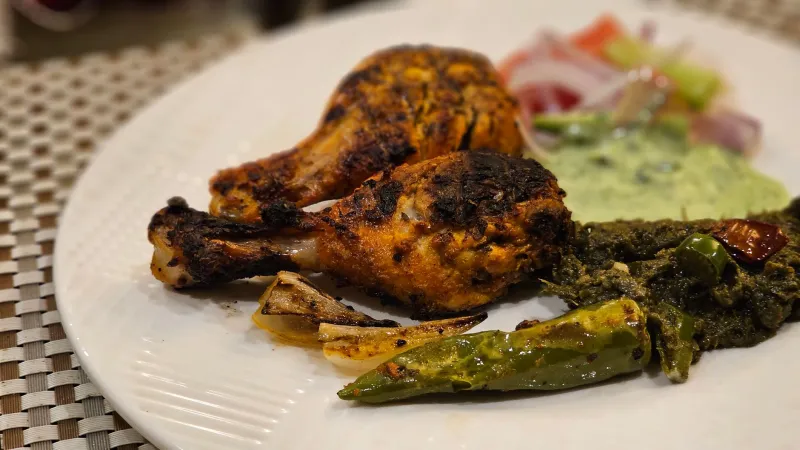
Three Tiers, Twenty Minutes: A Desk Lunch Worth Shutting the Laptop For

Photo: Bob Harvey , CC BY-SA 2.0, via Wikimedia Commons
Working from home was meant to fix lunch. No meal deal, no queue at the sandwich counter, no eating at your keyboard while pretending to read a spreadsheet. And yet here we are, eleven months into hybrid life, standing in front of an open fridge at 12:40 holding a bag of spinach with quiet resentment.
The problem isn't that there's nothing in the kitchen. It's that making something decent at lunchtime feels like a second job, and a sandwich feels like the only thing that takes less time than ordering one. So the toastie gets made. Again.
It's worth borrowing a bit of Indian domestic logic here. In Mumbai, Pune, Chennai and Delhi, the tiffin carrier isn't a quirky bit of kitchen kit — it's simply how lunch travels. Three stacked steel tiers, a clip on the side, the top lid doubling as a little plate. The format quietly solves exactly what the WFH lunch gets wrong: you need something hot, something starchy, something sharp, and they all need to arrive at the same time without three separate pans and a washing-up mountain.
The four-part formula
Every tiffin that actually works seems to follow the same loose shape. A soft, scoopable base — a dal, a bean curry, anything with a bit of sauce to it. A carrier — rice, roti, or half and half. Something sharp and salty — a pickle, a chutney, sliced onion with lime. And something for after: a chai sachet counts, and on a grey Tuesday it counts double.
Get those four elements right and the meal reads as deliberate rather than scavenged. Nobody has ever looked at a plate of dal, rice and pickle and thought 'that's sad desk food'.
Three menus, twenty minutes flat
Each of these serves one, assumes a hob and a mug, and is timed from a cold start. Most of the twenty minutes is simmering — time you can spend replying to messages and feeling smug.
Monday: moong dal and leftover rice
Rinse a mug of moong dal, simmer it with turmeric and salt for fifteen minutes while you get on with emails. At the end, sizzle cumin seeds, a sliced garlic clove and a dried chilli in a spoon of ghee for thirty seconds and pour it over. Squeeze in lemon. Middle tier: whatever rice survived the weekend, or a fresh mug of basmati if it didn't. Top tier: a teaspoon of mango pickle. Chai sachet in the drawer for three o'clock.
Wednesday: tinned chickpea chana
A tin of chickpeas, drained, fried hard in oil with sliced onion, ginger, garlic and cumin until the edges go a bit crisp — about twelve minutes. Finish with amchur or lemon, a pinch of garam masala and salt. Two rotis straight from the freezer, warmed in a dry pan, go in the middle tier wrapped in foil. A small lidded pot of coriander chutney rides on top. This one reheats well if you're the sort of person who eats at 11:45.
Friday: tempered peanut rice
Leftover rice, stir-fried with mustard seeds, peanuts, curry leaves and turmeric until it smells like a South Indian kitchen. Add lime off the heat. Alongside it, a small bowl of yoghurt with salt and roasted cumin, and a spoon of lime pickle in the top tier. Lighter than the other two, which is the point on a Friday.
Which jars actually travel
If you're assembling a hamper for someone else — or restocking your own shelf — the travel question matters more than the flavour question.
Pickles in oil are the safest bet by a mile. Mango, lime and chilli pickles will sit happily in a tiffin tier for hours and taste better for it. Fresh chutneys are the fragile ones: decant a small portion into a tiny screw-top pot rather than sending the whole jar, and keep it upright in the top tier. Dry spice blends and chai sachets travel without complaint. Anything watery needs to be sealed properly or left at home.
One practical note: don't put the pickle in the bottom tier. It will leak into your dal, and you will be eating pickle-flavoured dal, which is a choice — just not one you consciously made.
For the tiffin itself, look for a clip-lock stainless steel model with three tiers, a leakproof seal on at least the bottom one, and a shape that actually fits your draining board. The pretty ones that don't go in the dishwasher get used twice and then live in a cupboard.
Buying one for someone else
The person who eats lunch at the same kitchen table every day is genuinely hard to gift. They already own things. Their kitchen is small. They have opinions about mugs.
So build the hamper around shelf life rather than spectacle. A 200g jar of pickle, a 100g tub of a proper spice blend, a handful of chai sachets, and a modest tiffin will get used weekly for months; a giant wicker basket of things they'll never open gets used once and then donated. Keep the whole thing to a size that fits on one shelf.
Ask two questions before you buy. Do they have a hob, and do they reheat food? If the answer to both is no — plenty of people work from a shared kitchen or a studio flat — skip the tiffin entirely and go for a chutney-and-cracker hamper instead. It's a kinder gift than something that sits unused.
The small ritual of it
There's an underrated pleasure in stacking a tiffin at 12:30, carrying it four feet to the desk, and unclipping the tiers one by one. It's a proper pause in a day that otherwise blurs. Twenty minutes of cooking, ten minutes of eating something hot, and a chai sachet waiting for the afternoon. It beats a sandwich, and it beats pretending you're not hungry.