Build a Six-Jar Tour of India: Regional Blends Worth Clearing a Shelf For

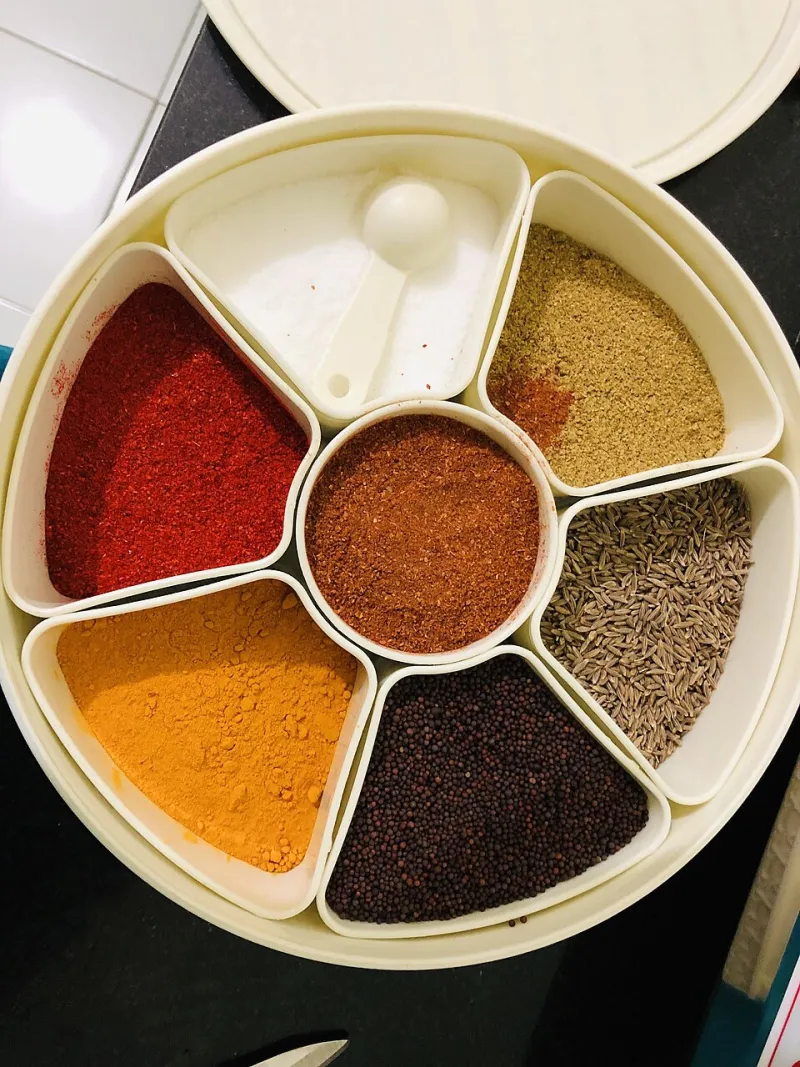
Photo: six small jars of Indian spices arranged flat lay with labels, via sixonbroadway.com
A good spice box is not a museum. It is a working shelf. The jars should be opened, sniffed, spooned into hot oil and used on a Tuesday. If you want to build a regional Indian spice box at home, you do not need to buy everything at once. Start with three blends, cook with them, then add the next. This is a six-stop tour, but it is also a practical kitchen project.
How to build the box without overspending
Buy small jars. Freshness matters more than quantity, and a 50g jar of a blend you love is better than 200g of something that goes stale at the back of the cupboard. Label the lids. Store the box away from the hob and out of direct sunlight. Add one blend at a time, and give yourself a fortnight to cook with it before moving on.
A sensible order is: Punjabi garam masala and Bengali panch phoron first, because they are the most immediately useful; Kashmiri chilli next, for colour; then Goan recheado, Chettinad masala and Parsi dhansak masala as your confidence grows. That is your build-your-own regional spice box: six jars, six cooking styles, no single generic curry powder in sight.
1. Bengali panch phoron: the five-spice that is not five-spice
Panch phoron comes from Bengal and is usually a whole-spice mix of cumin, fennel, fenugreek, mustard and nigella. The name means five spices, but do not confuse it with Chinese five-spice. The flavour is nutty, sweet and slightly bitter, with a mustardy edge that wakes up vegetables.
First recipe: panch phoron roasted carrots. Heat the oven to 200C. Toss 500g carrots, halved lengthways, with oil, salt and a generous teaspoon of panch phoron. Roast for 25 to 30 minutes until the edges are browned. Serve with yogurt and a squeeze of lemon. The whole spices toast in the oven and turn a plain bag of carrots into something worth talking about.
2. Goan recheado: the hot-sour paste from the coast
Recheado is a Goan paste with Portuguese influence, built on red chillies, garlic, ginger, tamarind, vinegar and warm spices. It is hot, tangy and slightly sweet, and it is traditionally used to stuff fish. You can buy it as a paste or make a quick version from supermarket ingredients.
First recipe: recheado prawns with rice. Mix two tablespoons of recheado paste with a little oil and lemon juice. Coat 300g raw king prawns and leave them for 15 minutes. Fry in a hot pan for two to three minutes per side. Serve with rice and a simple cucumber salad. If you are using a jarred paste, check the salt level before adding more.
3. Chettinad masala: pepper-forward and fragrant
Chettinad cooking comes from Tamil Nadu and is known for its bold, peppery blends. A typical masala includes black pepper, fennel, cumin, coriander, cardamom, cinnamon, cloves and dried chilli. It is warming rather than simply hot, with a deep savoury aroma.
First recipe: Chettinad mushrooms. Soften a chopped onion in oil, then add garlic, ginger and 400g chestnut mushrooms. Cook until the mushrooms are browned. Stir in two teaspoons of Chettinad masala, a chopped tomato and a splash of water. Simmer for 10 minutes and finish with coriander. Serve with rice or roti. This is a good way to use the blend without committing to a full meat curry.
4. Kashmiri chilli: colour without the fire
Kashmiri chilli is prized for its deep red colour and fruity, mild flavour. It is not the chilli to reach for if you want heat. It is the one you reach for when you want a dish to look generous and taste rounded. In a regional spice box, it is the colour note.
First recipe: Kashmiri chilli yogurt sweet potatoes. Roast two large sweet potatoes, cut into wedges, with oil and salt at 200C for about 30 minutes. Meanwhile, mix four tablespoons of yogurt with a teaspoon of Kashmiri chilli powder, a squeeze of lemon and a pinch of salt. Spoon over the hot potatoes. The chilli gives a lovely red blush without overpowering the yogurt.
5. Punjabi garam masala: the everyday finisher
Garam masala is not a single recipe. Punjabi versions often lean on cardamom, cinnamon, cloves, cumin, coriander, black pepper and bay. It is warming and aromatic, and it is usually added at the end of cooking rather than at the start. Think of it as a finishing spice, not the whole story.
First recipe: quick chickpea curry. Fry a chopped onion in oil until soft, then add garlic and ginger. Stir in a teaspoon of Punjabi garam masala, a tin of chopped tomatoes and two tins of drained chickpeas. Simmer for 15 minutes, then fold in a handful of spinach and a squeeze of lemon. Finish with another pinch of garam masala. Serve with rice or a baked potato.
6. Parsi dhansak masala: sweet, sour and layered
Parsi dhansak masala comes from the Parsi community and is used in the slow-cooked lentil and meat dish of the same name. The blend often includes coriander, cumin, fenugreek, turmeric, chilli, cinnamon, cardamom and cloves. It is complex, slightly sweet and deeply savoury, with a sour note from tamarind in the finished dish.
First recipe: dhansak-style lentil soup. Soften an onion in oil, then add garlic and ginger. Add 150g red lentils, 300g diced butternut squash, a teaspoon of dhansak masala and enough stock to cover. Simmer for 25 minutes until the lentils and squash are soft. Stir in a handful of spinach and a teaspoon of tamarind paste. Blend lightly if you like, or leave it chunky. Serve with rice or flatbreads.
What to cook first
If you are new to regional blends, start with panch phoron and garam masala. They are the most forgiving and the most likely to become everyday jars. Add Kashmiri chilli next, because it improves the look of almost anything. Then move on to recheado, Chettinad and dhansak when you want a cooking project.
The point of a regional spice box is not to collect six jars and admire them. It is to let each one change the way you cook. A spoonful here, a pinch there, and a ordinary midweek dinner starts to sound a lot more interesting.